
Category Archives: Feature

Celebrating Hispanic culture during Hispanic Heritage Month

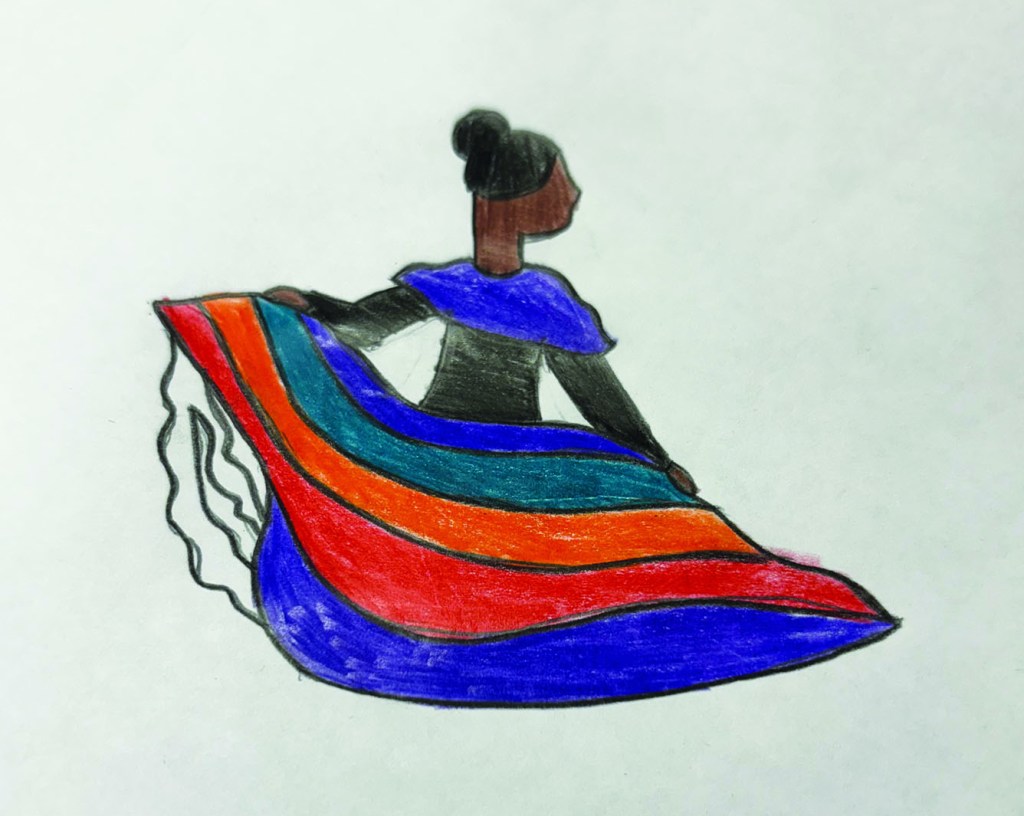
     Hispanic Heritage Month celebrates and recognizes the contribution and influences of Hispanic Americans in the past and present and  can also be a time for people of Hispanic Heritage to celebrate and honor their culture. 

     From Sep. 15 through Oct. 15, Hispanic Heritage Month celebrates the 19.1% of the population in the United States, making Hispanics the nation’s largest ethnic minority. There are hundreds of inspiring Hispanic people in the world who have paved the way for people who feel they can not take that extra step into greatness. Whether these people started as everyday people or have always been known, they show others that a person’s background does not define how successful he or she can be, which can be anyone from actresses to astronauts to activists. 

     Jenna Ortega is an upcoming actress of Mexican and Puerto Rican descent. She gets her Mexican heritage from her father, a businessman, and her Puerto Rican heritage from her mother, a nurse. It was difficult for her to find a role as a child without acting experience. 

     Adding on to that, later in life she commented that casting directors rejected her often due to her β€œnot having the look they were going for.” After persistence, she landed a small role in the sitcom β€œRob.” Among the many films and TV series she has started, she also released a book in 2021 at the age of seventeen titled β€œIt’s All Love: Reflections for Your Heart & Soul,” describing her life and career. 

     The novel also details the struggles of creating an acting career as a Latina in Hollywood. Ortega has been nominated for many awards and has won four. She is an inspiration to many young Latina girls, striving to represent the power of Hispanic women all around. 

     β€œOur skin tone doesn’t define what we can and can’t do. Young girls need to see this so that we can encourage them to embrace their intelligence and their differences,” Ortega shared in an interview with β€œForbes.”

     Inspirational Latinas are not just restricted to Earth–they can also reach space. The First Latina woman to go to space, Ellen Ochoa, made a big impact on Hispanic people around the world. 

     Ochoa received her education at Stanford University with a master’s and doctorate in Electrical Engineering. Before her trip to space, Ochoa worked as a research engineer for Sandia National Laboratories and for the Ames Research Center of the National Aeronautics and Space Administration. 

     Ochoa was selected for the astronaut program by NASA in 1990. Her first mission was in 1993 when she was a Mission Specialist aboard the STS-56. Later in life, she was part of one of the first dockings to the International Space Station in 1999. Combining the four space missions she went on, Ochoa spent 40 whole days in space. 

     She then went on to become the director of the Johnson Space Center in Houston, Texas, making her the second woman and the first person of Hispanic descent to hold the post. After retiring she became vice chair of the National Science Board and even received the Presidential Medal of Freedom from President Joe Biden in 2024. 

     Ochoa showed that no matter from where people come or what they look like, they can pursue their dreams. 

     Being a person of color in a world where most do not understand is hard enough, though some people may also be a part of communities who are in that same predicament. Sylvia Rivera, a civil rights activist for gay rights and transgender women, is Puerto Rican and Venezuelan. 

     Though she had a positive impact on the world, her life was not always just that. Rivera’s father left when she was a baby, and her mother died from suicide when she was only three, which left her grandmother to raise her–though the brutality does not end there. 

     Growing up she would try on girls’ clothing and put makeup on, which instigated beatings. With no hope left, Rivera ran away from home at the age of eleven to live on the streets of New York. While there she met a transgender activist, Marsha P. Johnson, who related to the struggles she was going through as a transgender person. 

     Rivera then participated in the infamous Stonewall Riots with Johnson, which was a series of fights between the police and gay rights activists in front of a gay bar called The Stonewall Inn. Though Rivera was involved in many of the gay rights groups, most of them were originally discriminatory against drag queens and ones of color in particular, which resulted in most transgender and genderfluid people being discouraged from participating in parades or other gay rights activist events. 

     People often say that they must fight for the right to be in the community, but in 1970, Rivera and Johnson founded the Street Transvestite Action Revolutionaries, which focused on helping Transgender individuals, especially homeless ones. 

     Rivera, though struggling with her problems, always seemed to want what was best for her community, whether it wanted her or not. Today she is honored by her actions at the celebration of the Stonewall Riots. She paved the way not only for queer people but those of color. 

     Many students in the high school aslo have Hispanic heritage, whether their family is from Spain, Puerto Rico, Mexico, Cuba, Colombia, or any of the Hispanic communities. 

     Holidays can be one of the most important things in a culture, involving traditions and bringing families together. 

     β€œAs part of my culture, we celebrate Dia De Los Muertos or Dia De Los Reyes especially. It’s a very important day in Puerto Rico. I don’t know if it’s that day or the day after that there’s a huge celebration called β€˜Children’s Day,’ and it’s to honor kids the same way that the three kings honored Jesus in the Bible,” junior Valentino Mueller-Figueroa shared. 

     Though most Hispanic people who live in America celebrate American holidays, they may also add their traditions and flairs to them. All holidays have traditions to them, though the celebration of them differs from each culture. 

     β€œWe typically celebrate all of the holidays that are celebrated in the United States,” sophomore Mia Carmona said. β€œWe might just have our traditions for that holiday.” 

     Holidays can also vary from culture to culture, not just between ethnicities. Student Annia Castillo was born in Columbia, where they celebrate a certain holiday in December. 

     β€œOne of the biggest holidays we have is Siete de Velas or Seven of Candles. We celebrate it on December 7, and it’s like a Catholic celebration, and it is very important,” Castillo said. 

     Even though they can be seen as meaningless celebrations, holidays can be the most important part of the year. Feeling accepted and represented at school, not just by peers but by teachers, can change whether someone enjoys being there or not. There are so many things school faculty can do to make their school more diverse and friendly.

     β€œThe whole Hispanic Heritage month that BTA does, that I participate in, is very nice. I loved having the film festival last year. It was just really nice seeing a lot of people interested in not only my culture but in other Latin American countries, too,” Carmona said. 

     Showing off Hispanic cultures can bring other ethnicities to become interested in learning more about the history of their fellow students. When a teacher takes the time to understand and show care to their students’ personal lives and culture, it can make the students feel more comfortable and safe in that environment. 

     β€œWhen I was in eighth grade, I told one of the Spanish teachers about the Seven of Candles, and she gave each of my teachers a candle that they put on their desk,” Castillo said. 

     Though pop culture has become more diverse and representative, there are still many things in the media that misrepresent cultures and ethnicities. 

     β€œWell we are for sure one of the most underrepresented populations,” Mueller-Figueroa stated, β€œespecially in the United States. There’s not a lot of Hispanic anything unless you go to places where there are very heavily concentrated Hispanic people. Even then, like for example, in movies and TV shows, there are not a lot of Hispanics, and if there are they’re usually made to be more of a side character, and they’re very whitewashed, so it’s not entirely accurate.” 

     Misrepresentation can lead to false stereotypes about a group of people. Underrepresentation is even worse, burying culture in the media. 

     β€œI feel like every country deserves to be represented more, and I feel like we always see the bad things. Mexicans specifically just have a bad reputation here in the United States. I wouldn’t say that the way we are represented is accurate, though sometimes it can be true. I just wish that people would understand that not everything you see in the media is true,” Carmona said. 

     Discrimination not only happens online but can be expressed right to someone’s face. Mueller-Figueroa’s everyday life often is affected by others and their judgements.

     β€œSometimes on the street, it’s not as common here in Ohio depending on where you go, but people will give me weird looks a lot, especially when I’m with my mom. Sometimes you feel singled out, and even though someone may not be trying to single you out, they still do,” Mueller-Figueroa stated.

     Maybe if a student does not necessarily look like they are from their ethnic group, but their parents do, they may not experience this hate unless they are with their parents. 

     β€œI feel like a lot of the times when I hear about it or experience it, it’s not mainly towards me. A lot of people tend to comment on my parents. My parents are immigrants, so they came from Mexico to the United States, so when I tell people that it’s a very sensitive topic, some people look at me, and they think badly of me, but I genuinely don’t think it’s a bad thing,” Carmona said. 

     The biggest thing people of smaller ethnic groups want is for others to just understand their culture. By understanding it, people can respect and appreciate the history and practices of others. 

     Carmona shared how she felt about acceptance in the world and her life: β€œJust understanding that we’re all kind of different but at the end of the day, we’re all just humans. Just celebrate our differences.”
Source: Stohion/Jennifer Ostlund

Deaf Awareness Month highlights Deaf culture

Ty Phillips / Staff Writer

Continued from page 14…

Not only should people stop yelling to stop miscommunication, but also, some hard-of-hearing people may have heightened sensitivity.Β  β€œWe have longer hairs on our ears, making a lot of things overwhelming,” Sayre said. β€œOften when I have my hearing aids in I will be having a conversation with one person, and if I hear another conversation I will respond to that one.”  People often think being Deaf is a disability, but this is not the case for everyone. Some Deaf people see being deaf as a β€œgift” that allows them to connect to the world in other ways. Hearing people may think that just because a person is hard of hearing they can talk about that person.Β Β  β€œThere is this girl in my class who would talk badly about me when I was standing directly next to her,” Sayre explained. β€œShe assumed that I wouldn’t be able to hear her just because I wear hearing aids.” Being kind is something that people tend to forget when it comes to disabled people.

Women’s history: marching forward

     Starting in 1987, the entirety of March is declared Women’s History Month and dedicated to honoring and highlighting the contributions of women to American society. 

     According to the National Women’s History Museum, the month had originally started in 1978 in California as β€œWomen’s History Week” and corresponded with International Women’s Day on March 8, which was established a year earlier in 1977. It was not until 1987 when Congress passed Public Law 100-9 and designated March to be Women’s History Month. 

   The United States was established in 1776, but it was not until 1920 when women were granted the right to vote. For over 100 years, women were forced to submit to laws they had no voice in. In 1871, Elizabeth Cady Stanton and Susan B. Anthony, formed the National Women’s Suffrage Association and sent a petition to congress asking for suffrage rights to be extended to women, and that women should be heard on the floor of congress. Roughly 50 years of protesting later, Congress passed the 19th Amendment, saying β€œThe right of citizens of the United States to vote shall not be denied or abridged by the United States or by any State on account of sex”. 

    Following the Industrial Revolution, women had started to enter the workforce. In 1840, roughly 10 percent of women had jobs, and by 1850 that percentage increased to 15. However, for over 100 years women were only making anywhere from two-thirds to half of what men in similar occupations were making. 40 years after women were given the right to vote, in 1963 the Equal Pay act was anointed and prohibited the pay discrimination on the basis of sex. However, to this day, the Gender Wage Gap is still an ongoing issue in the American workforce.

    Women were not able to attend college until the 19th century when the first co-ed and women-only colleges such as Oberlin and Wesleyan opened. In 1840, Catherine Brewer was the first woman to obtain a bachelors degree, a few years later in 1849, Elizabeth Blackwell became the first female physician. In the early 1900’s, only 19 percent of women earned bachelors degrees, but by 1930 the percentage doubled to 40. Now, a little over 50 percent of women 25 and older have at least one degree. 

    For Dr. Mary Ruehr, one of the science teachers at the high school, when she hears the words β€œWomens History Month,” the first thing that comes to mind is the ongoing issue of the Gender Wage Gap and the history of women’s employment, β€œFor long periods in our history, women were not really in certain jobs, or women were employed in certain jobs as opposed to men and vice versa.” 

     For example, according to the Pew Research Center in 2022 the median pay for a working woman is 78 cents for every dollar earned by a male counterpart. From the American Association of University Women, overtime this causes women to earn 16 percent less than men, and at the current rate of change, pay equality will not become equal until 2088.  

     Throughout her years of school, Ruehr recalled that Meredith Bond at Cleveland State, who was one of her female advisors following finishing her PhD and completing her post-doctoral, was one of the most academically influential female figures in her life. 

     β€œShe did help mentor me quite a bit,” Ruehr recalled, β€œI feel that she helped encourage me to attend different meetings, to try and speak more loudly for myself and pushed me to apply for different positions.” 

      Throughout school and obtaining her degree in Biology, Ruehr said that the academic environment was female-dominant, which provided a more comfortable environment. According to the National Science Foundation, about two-thirds of the STEM workforce are men while the remaining third were women. Ruehr added onto this, saying that she tended to see later on that the higher-level positions were occupied by more men than women, comparing some groups to the β€œold boy network” and while positions or opportunities may seem available, in reality they were not.

     She explained that she especially saw this while she was working at a clinic while she had decided to have children, β€œI do feel I had some discrimination when I would interview for different jobs, or people would make comments regarding my schedule with my kids. It was kind of frowned upon if I had to take off because my kid was sick.” 

     Ruehr explained how while she did the same amount of work as everyone else, she had to work her schedule around parenthood.

     β€œI feel for the teachers here who have little kids or are pregnant while they are teaching, even though it was hard for me at the clinic, my schedule was more flexible and I was able to move hours around and still get my work done. I could not do that here, you would have to take off time. That was probably the biggest form of discrimination I have experienced.” 

    For girls who are pursuing higher education or looking towards graduate or medical school, Ruehr wanted to tell them, β€œRealize that other people are in that same situation and do not feel like you are isolated, even though it looks like you might be. Do not worry about what other people are saying, focus on your own work and do not let others get you down.”

Source: Stohion/Emily Bezjak

Evaluating the Biden administration after one year

Tyler Kavalecz / Broadcast Manager

     Unlike a smooth, straight-line bullet train, the Biden administration’s first year has been like a ride at Cedar Point; filled with countless peaks and valleys, highs and lows. 

     After taking office, President Joe Biden did not waste time in trying to make change. In his first 100 days in office, he issued 106 executive actions, with 42 of those being executive orders. The number of executive actions Biden issued was more than his three predecessors, Trump, Obama and Bush combined in that time span.

     Possibly more significant, is the number of Biden’s executive orders that repealed Trumps’ past orders. Out of his 42 executive orders in his first 100 days, 20 revoked former Trump-era orders. Some of Biden’s actions included halting funding for Trump’s border wall, reversing Trump’s travel ban that targeted mainly Muslim countries, imposing a mask manndate on federal properties, ramping up vaccine supplies, canceling the Keystone XL pipeline and reversing Trump’s ban on transgender Americans joining the military.

     While signing executive actions seemingly every day, Biden was also working on creating a diverse cabinet, something that Democrats heavily supported. Biden established a cabinet that was substantially more diverse than his predecessors’, with large percentages of the leaders being either minorities or women.

     Although Biden accomplished two of his early goals with his executive actions and cabinet, America had to wait over 60 days before they formally heard from the new president. Biden did not hold a formal press conference until nine weeks into his presidency, an unprecedented wait, longer than any other president in modern history. Unsurprisingly, this was met with backlash across the country, especially among Republicans and conservatives.

     One of Biden’s most significant, yet underlying accomplishments is his rapid-paced appointing of federal judges. Biden has appointed 45 article three judges who have been confirmed by the Senate through Feb. 1, the most such appointments through that point in all presidencies since 1981. For comparison, his predecessor, Trump, had 24 appointees confirmed by the Senate during the same time frame of his presidency. 

     Along with appointing a large number of federal judges, Biden will have his choice at a Supreme Court justice, with Justice Stephen Breyer recently announcing he will retire from the nation’s highest court at the end of the current term. The departure of Breyer, the oldest justice on the bench, will allow Biden to follow through on his promise of nominating a black woman to the Supreme Court. 

     Another one of the most surprising successes of the Biden administration’s first year has been job creation. Employers added a record 6.6 million jobs during Biden’s first 12 months in office, by far the most by any president’s first year since the number was tracked. 

     But, one could argue that the main reason so many jobs have been created under Biden is because of timing. Biden took office just as Covid-19 vaccines were becoming available and the economy was enjoying a natural recovery.

     On the other side of the aisle, it can be argued that many of the jobs created have been due to the massive $1.9 trillion pandemic relief package. Some economists have argued that the package added almost four million jobs, on top of around three million jobs that would likely have been added even without the package.

     Although the unemployment rate has declined under Biden’s first year, inflation has not. During the first year of the Biden administration inflation has skyrocketed, creating issues with supply chains across the country, along with prices, especially pertaining to gas prices. According to the American Automobile Association (AAA), the average price of gas for the country has risen almost a full dollar over the past year.

     Inflation, the driving cause of these issues, skyrocketed to its highest rate in 40 years, with consumer prices increasing 7.5% over the past 12 months. This increase forced the average American household to spend an extra $276 per month. Over the past year, energy rose 27%, with fuel oil and gasoline individually rising 46.5% and 40% respectively.

     While inflation was predicted to rise over the past year, the actual number overshot the Dow Jones estimates. Much of this is due to the Biden administration’s misreading of the situation, with government spending having gone through the roof during Biden’s first year in office.

     Arguably the most glaring negative through Biden’s first year in office is the United States’ pullout from Afghanistan. In short, it is one of the biggest diplomatic and international failures in recent memory, and honestly, an embarrassment for the country.

     Another disaster for the Biden administration through their first year has been the U.S.-Mexico border. Biden repeatedly called out former President Trump for his policies and handling of the illegal immigrant situation at the border, but Biden has failed to correct the situation, with it further deteriorating under his watch.

     According to the U.S. Customs and Border Protection, more than two million unauthorized migrants were apprehended or turned in after crossing the border in 2021. Those figures only show those who have been caught, excluding the thousands that crossed the border successfully, and illegally last year.

     Biden has tried his best to reverse almost all of Trump’s policies with the border. The current president called his predecessors’ β€˜Remain in Mexico’ policy β€œinhumane” when Trump established it. Yet, Biden’s administration has reinstated that very same policy and enforced it, due to how bad the border crisis has gotten.

     All of this is just a glimpse of the full view of the Biden administration’s first year in office. In my opinion, along with his international failures, some of Biden’s biggest failures have been his shortcomings in uniting the country, both political parties and even his own political party. 

     Overall, the administration’s first year lacked consistency, with constant fluctuation between high and low points, with the lows being more extreme than the highs. However, I am cautiously optimistic that the administration’s second year will be more consistent and successful.