Hozier 2024 album inspires audience through history and Greek mythology

By Annika Young, Editor-in-Chief

     Hozier’s 2024 album, β€œUnreal Unearth,” incorporates mythology and history with modern societal problems, wrapped up in touching lyrics and haunting melodies. His album takes the listener through Dante’s Inferno, uncovering the nine circles of hell in his lyricism.

     Hozier’s music has often had many of the same ideals, focusing on conflict, war, and human greed. β€˜Unreal Unearth’ begins with β€˜De Selby’ Parts 1 and 2 starting the descent into hell. The songs are based on the novel β€œThe Third Policeman,” by Flann O’Brien. In the novel, De Selby is an Irish philosopher and scientist studying the paradoxical mind. 

     The themes of the novel are reflected in the song, as his lyrics in Part 1 explore identity and reality. While Part 2 Hozier continues to use the motif of darkness, only following the romantic lyrics at the end of Part 1.

     Entering the first circle of hell, β€œLimbo,” is the song First Time. Limbo is the circle for those who, although never lived in sin, were never baptized. Those stuck in Limbo are cursed with perpetual sadness and a longing for God’s presence in their lives. At first listen, the song is a love song, but the song transforms in the middle where he begins recalling a moment where he was struggling but his mother left flowers on his counter. The song then takes on a new meaning–the circle of both life and death and how interconnected they are.

     β€œFrancesca” is the next song on the album and is also the first song in the second circle, Lust. The circle of lust punishes lovers who have given in to the desires. The song is based on the two lovers, Francesca da Rimini and Paolo Malatesta, from Dante’s Inferno. Both fell in love with each other although Francesca was tricked into marrying his brother. They had an affair, were murdered and were sent to hell for their β€œuncontrollable lust.” Every lyric Hozier writes relates perfectly to this story and captures the love they had that was torn away from them due to the marriage.

     Continuing the journey in the circle of Lust is the song β€œI, Carrion (Icarian).” The title of the song is interpreted as Carrion meaning rotting flesh and Icarian meaning Icarus, a figure from Greek mythology. The woman in this story is keeping the world together for him. He even describes it as very heavy, but his love is surface-level. He does not care how hard it is. He asks her to float away with him, even though it is the irresponsible and unrealistic thing to do, and he knows the consequences risking both of their lives. 

     Entering the third circle of gluttony is the song, β€œEat Your Young.” The theme of gluttony is immediately apparent in the first three lines, although the song is not discussing gluttony in a typical sense. 

     β€œDamage Gets Done” is in the fourth circle, Greed. The song is a journey of two lovers who used to feel that they had the whole world just by having each other. Their mindsets changed, and their desire to feel fulfilled resulted in the destruction of their relationship.

     The fifth circle, Wrath, is portrayed by the eighth song of the album, β€œWho We Are.” Wrath is repressed anger and the song describes the loss of someone who used to be important. The narrator explains how he didn’t see it coming and the relationship burning out by trying to become something it wasn’t. 

     The song β€œSon of Nyx” is the next song on the album but does not contain any lyrics. This song is listed as a part of the sixth circle, Heresy. The circle of Hersey is for those who have rejected the Christian doctrine. The eerie murmurs are soothing but growing instrumentals mirror those who are imprisoned in this circle in fiery, open tombs.

     β€œAll Things End” is the second song in the sixth circle. This song, as represented by the title, discusses how it is normal for everything to end, and in this case it is referring to a relationship. The idea that a relationship and the promised eternal devotion to another person will end up being broken in some way, which can be seen as the narrator rejecting God or religion because God is seen as β€œeternally loving.” 

     β€œTo Someone From A Warm Climate (Uiscefhuaraithe),” is in the seventh circle, Violence. This song is immensely complicated, with layers of meaningful lyricism, and it is also sonically beautiful. There are string instruments mixed in with a soft melody. The narrator through the lyrics is comparing their knowledge to how easy it was for them to love each other. The last lyric is the betrayal of his lover cheating on him. The violence in this song is the amount of love he felt for this person and the heartbreak that came from loving someone that much. 

     β€œButchered Tongue,” stays in the Violence circle. This song references the loss of a language, in Hozier’s case, Gaelic. The forced and voluntary emigration out of Ireland as well as political efforts to get rid of the language have lessened the use of Gaelic and have led to loss of history and the feeling of having roots in Ireland. 

     β€œAnything But,” starts the eight circle of Fraud. The verses seem as though they are describing thoughtful things to do for somebody. Although it sounds like a love song, it is actually about rejecting someone, which is why it fits into the circle of Fraud.

     β€œAbstract” is the next song in the circle of Fraud. This song is about how as a kid Hozier watched someone hit an animal with a car and get out of the car to comfort the animal as it died. His lyrics explain how the person had no intention to hit the animal with the car, it just happened, just like how he didn’t try to fall in love but he simply had no choice but to not. 

     The ninth circle is Treachery and is represented by the song, β€œUnknown / nth.” The narrator falls in love, and he explains all of the things he would do to reach her. He calls her an angel and she reciprocates, calling him an angel as well; however, the lover has trapped the narrator and won his heart.

     The final song on the album’s initial release is β€œFirst Light.” β€œFirst Light” symbolizes the ascent, a turning point at the end of the Inferno that leads to the Purgatorio. This begins Dante’s difficult journey upwards. 

     Overall, Hozier’s album β€œUnreal Unearth” portrays societal issues through intense symbolism, allegories and a comparison to both history and Greek mythology.


United States veterans tell their stories

Bryanna Pullins / Website Manager


     β€œTo support and defend the Constitution of the United States against all enemies, foreign or domestic” is a quote Truman said July 26, 1947. 

     What does this truly mean? From a young age, I have been force-fed the idea that once you join the military, you spend your days training, fighting, and preparing for the next big war or attack. 

     Now, while that is not necessarily false, much more happens behind the scenes. My family is not new to the military scene. Going back three generations, my family has been dedicated to serving their country, but what did this truly look like?

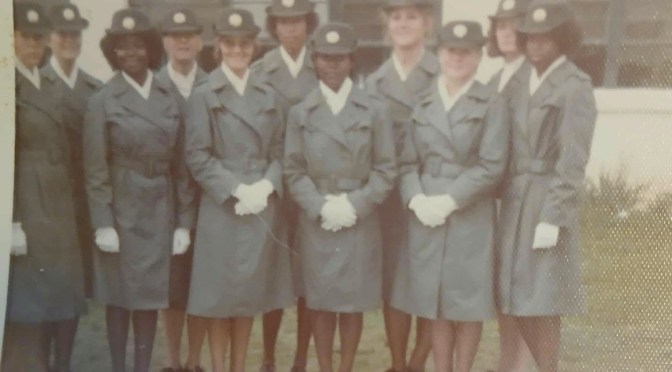
     My Grandmother, Wanda Coleman, is among the many brave people who served our country. Straight out of college, at the age of 20, she served in the U.S. Army from 1975 to 1977.

     Military service was not new to her family, as it was Coleman who followed in the footsteps of her siblings. 

     β€œThere were seven of us, and out of the seven, six of us went into the military,” Coleman said.

     This family legacy was not what convinced her to go into the military. A friend talked Coleman into joining the military, β€œWe were both supposed to go in at the same time, be in the same platoon, and all of that. I went, and she didn’t.”

     Though supported by her parents, they worried that joining the military was the right move for her. 

     β€œI was a naive young lady–that was another reason my family was scared about me going into the military. I didn’t pay any attention to what was going on in politics or with the government,” Coleman said. β€œI just knew my girlfriend asked me to join the buddy system, you make good money, and you pay for your schooling, so that’s why I was there.” 

     Coleman had a clear goal in mind, and she planned to see it to the end. With the support of her family and the strength within herself, she proceeded with her military career.

     At the time of Coleman’s enlistment, MOS (Military Occupational Specialty), which refers to a service member’s job, was not available. This means that enlistees had no control over what their assignment/job would be. 

     Despite this change, Coleman continued with her intentions. 

     β€œLooking back, I was reminded that it was a stock control specialist [an assignment in which I was placed], but I never really worked in it; I became a battalion mail clerk, which I loved,” Coleman explained.

     The assignment of β€˜battalion mail clerk’ included β€œhandle[ing] the mail for the entire battalion in different companies within the battalion,” Coleman said. β€œI picked up the mail, sorted the mail and delivered the mail [on the military base].”

     Regardless of her given position, basic training was still required. Coleman recounted this as one of the hardest times for her. 

     β€œIt was rough, but I loved it. My family was concerned about it because they didn’t think that I could do it, but I became a squad leader and then a platoon leader, and I was selected to call cadence,” Coleman said. 

     Those successful basic training did not go without its challenges.

     β€œThe only time I got very frustrated and cried was at the firing range. Something was wrong with my weapon. They didn’t know, and I didn’t know it. I have three chances to qualify, and I only had one left,” she said.β€œI went to the bathroom that night and cried in the shower…and then the next day when I was going to qualify they checked my weapon and saw that the site was off. It wasn’t my fault it was the weapon, and I qualified that day.”

Continued on website…

Β Β Β Β Β In January of 1977, Coleman made the decision to leave the U.S. Army.Β 

     β€œI had just gotten engaged, and while we were [off post], my first sergeant called and told me I got selected to go down to Germany. Well, my fiancΓ© didn’t want to go to Germany. He would have had to re-enlist, and he didn’t want to re-enlist to go down to Germany. Well, the only way I could get out was to be expecting or to get out of the service, so the only choice I had was to get out of the army,” Coleman said.

     To this day, Coleman regrets that decision. She wishes she would have gone to Germany and traveled more rather than getting married. 

     β€œI had my sergeant trying to convince me to go, and he said that if it was true love, it would be there when I got back,” Coleman explained.

     Given Coleman’s decision to leave the Army, she often feels undeserving of veteran status due to her time served: β€œI don’t feel as important as the rest of the veterans.” 

     While some, including Coleman, had a pleasant military service this is not the case for others.

     Family member Mary Johnson* served in the U.S. Army as well. 

     β€œI served a year, six months, and 23 days to be exact. From December the 9 of 1975 until July 1 of 1977; although, I signed up for a three-year term,” Johnson said. 

     Johnson joined the military at the age of 20, seeking the ability to afford college. Her family was worried about her joining the military due to her meekness and physical size. They feared she would not be able to withstand the grueling training.

     Her parents and the part of the world she lived in underestimated her. 

     β€œI think it’s common in the military, as well as in law enforcement, because that is part of my background as well,” Johnson said. β€œFemales are considered to be weaker vessels or weaker persons, and less important, less qualified and so more desired positions were offered to males or not offered to people of color.”

     However, Johnson needed an escape from the place she called home. 

     β€œIt was a need to provide financial support, and in all honesty, it was a need to escape my home environment… most of my childhood and home life was unsafe and very dysfunctional,” Johnson said.

     Johnson was able to find a new home while in boot camp: β€œWe were like family, like sisters. It didn’t matter the color or the background, so that [community] did exist, and I did have that experience.”

     Johnson was later assigned to the 497th transportation motor pool as a transportation dispatching clerk.  

     β€œI was responsible for preparing the daily maintenance deadline report of our transportation vehicles and equipment, also for scheduling services and repairs for that fleet and equipment,” Johnson said. 

     After her assignment, Johnson became isolated in the motor pool. 

     β€œI was the only female assigned to the dispatch office, which is stressful, and uncomfortable, but I was able to do the job, ” Johnson said.

     It was not until then that she was subjected to racist comments and sexual harassment by a superior. 

     β€œI had a white male supervisor, [a] sergeant who was narcissistic, toxic and just not the best supervisor to be under his leadership. He would tell off-colored jokes,” Johnson said.

     Johnson went on to recount a racist joke involving a young African American child: β€œAnd I laughed out of fear, insecurity, coming from a dysfunctional home and other reasons that I am aware of and unaware of because it wasn’t funny, and I didn’t want to laugh, and because I was by myself, and it was just he and I, it was in my best interest to go along to get along, in that environment.”

     Johnson believed she could handle such comments; however, this treatment did not stop with the sergeant. 

     β€œThere was one soldier with a friend who would be waiting for me that would just say very off-colored and unwarranted things to me, of a sexual nature. It made me fearful because I was always by myself, so he would wait for me,” Johnson said. 

     This behavior continued until Johnson no longer felt safe going to work. She prayed that God would stay with her and not test her at this time. Her fear led her to no longer leaving her room.

     Johnson then recounted a time when the captain of her company gained access to her locked room.

     β€œIt felt like I had been drugged, but I didn’t do drugs, I didn’t drink and I couldn’t explain why I couldn’t get out of my bed,” Johnson said. β€œI don’t know if anything happened to me or why he was in my room. I just know shortly after that, I ended up in the hospital.”

     The hospital examined her and later sent her to the main hospital in Washington, D.C. where she was transferred to their psych ward. 

     β€œI was hospitalized from March of 1977 until I was discharged from the military in July of 1977,” Johnson said.

     The anti-psychotic meds were forced on Johnson until she was discharged. 

     β€œI was sent home where I escaped with a 100% disability rating,” Johnson said. 

New coaching rule brings major changes to winter sports season

Trevor Ing / Editor-In-Chief

     At the beginning of every school year, teachers may retire, and teachers step up and take higher roles or new teachers are hired in replacement. The same goes for coaches of different sports. 

    This year, Stow saw the addition of five new sports coaches. Girls’ and boys’ basketball, girls’ soccer, baseball and bowling. 

     Recently, there has been a huge emphasis on high school sports. A student’s coach can quickly become the most important teacher they have, and when that teacher walks the hallways of their own school, it may mean more to the student than expected.

     Many of these coaches have been at Stow for many years, so what brought about this change?

     When figuring out the right person for the job, the Athletic Department first needs to figure out what exactly they want to have as a priority. Recently, the school has introduced a new emphasis on hiring coaches who are teachers at the school before reaching out to the community. 

     β€œWe emphasize that if they’re walking the halls, we want to get them coaching,” Athletic Director, Cyle Feldman said.

     With the coaching contract being one year, the athletic department had enough time to communicate and decide on teachers in the building who would be better suited to fit the needs of the student athletes. In Feldman’s mind, β€œyou always are looking for what’s best for kids.”

     A huge component of the change was that each coach needs to understand what’s happening in the classroom as well as on the field. For example, there was a problem with volleyball matches ending late, which caused many athletes to be unable to get all their work finished without sacrificing the much needed sleep to recover from a big game. A teacher in the building has better understanding and is able to communicate much better to other teachers if problems like this occur.

     β€œIf somebody’s walking our halls, we want them to be able to see our kids during the day and have an influence on them, mentoring them and communicating with them,” Feldman said.

     One big coaching change that received a lot of attention was the replacement of Bob Podges, the previous girls’ basketball coach, who had been coaching for 32 years. Math teacher Andrew O’Keefe will be taking Podges’ position as the new girls head coach. O’Keefe has been coaching at CVCA for the past eight years. O’Keefe posted a 137-65 record in eight seasons as CVCA’s girls’ basketball coach, winning six league titles, three district championships and four Coach of the Year honors.

     Similar to O’Keefe, Podges coached 12 league Players of the Year, named Ohio High School Basketball Coaches Association Division I Coach of the Year back in 2017, earned league Coach of the Year 12 times and was named the All-Ohio Northeast Inland District Division 1 Coach of the Year three times.

Continued on website…

     So this begs the question, why not continue the contract of a coach who has such an incredible legacy? 

     According to Feldman, it came down to two things. The first being the emphasis on having a coach be one of the administrators in the school to better mentor their athletes, and the second being how much of a relationship O’Keefe was building with the younger generation.

     β€œOne of our big goals in all our programs is aligning with the youth, and Kimpton, and the early returns on coach O’Keefe are great,” Feldman said.

     A big problem with basketball, along with other sports at Stow, is how many students are advancing CVCA or Walsh instead of the Stow because of athletics. One of the reasons students were going to CVCA instead of Stow was because they knew about O’Keefe prior to going to high school.

     While coaching at CVCA, O’Keefe felt a disconnect between himself and the community at Stow. At the time, both head coach positions were taken at Stow, so O’Keefe didn’t see a path where he would become the head coach while working under Coach Dave Close. He was given the opportunity to become a Head Coach at CVCA and took it despite it not being his home school.

     β€œI remember my first pep rally after getting hired at CVCA, and I just stood there in the gym, and I was just like, β€˜man.’ It just wasn’t the same for me. It was hard because I wasn’t coaching here anymore,” O’Keefe said.

     O’Keefe also felt how much he lost with not having his athletes in his classroom. He felt like a huge part of how he coaches was gone because he lost that ability to connect.

     β€œI lost that relationship that gets developed in the gym. I think it’s completely different than the classroom because in the classroom, kids are working on something that they have to do; whereas in the gym, they’re working on something that they love,” O’Keefe said.

     When administrators gave O’Keefe the opportunity to become the new girls’ head coach, he stepped up for the job hoping to follow Podges’ legacy the best he could.

     β€œThey saw me as a qualified candidate, and they asked me if I’d be interested in applying for the position, and I did,” O’Keefe said.

     Besides the controversy, O’Keefe is excited for this year and thinks the team will perform well. O’Keefe was not just handed the job solely because he was a teacher who applied.

      β€œI’m really excited to be back. I think the girls are excited, I think families are excited, and we’re looking forward to the season,” O’Keefe said.

Source: Stohion/ Maya Cooper

Girls basketball coach Andrew O’Keefe coaches the 11/15 scrimmage.Β 

EXCELLENCE IN JOURNALISM FOR OVER 90 YEARS

Design a site like this with WordPress.com
Get started