All posts by Stohion Staff

Bathroom closures cause for concern

By Cooper Gregg/Editor

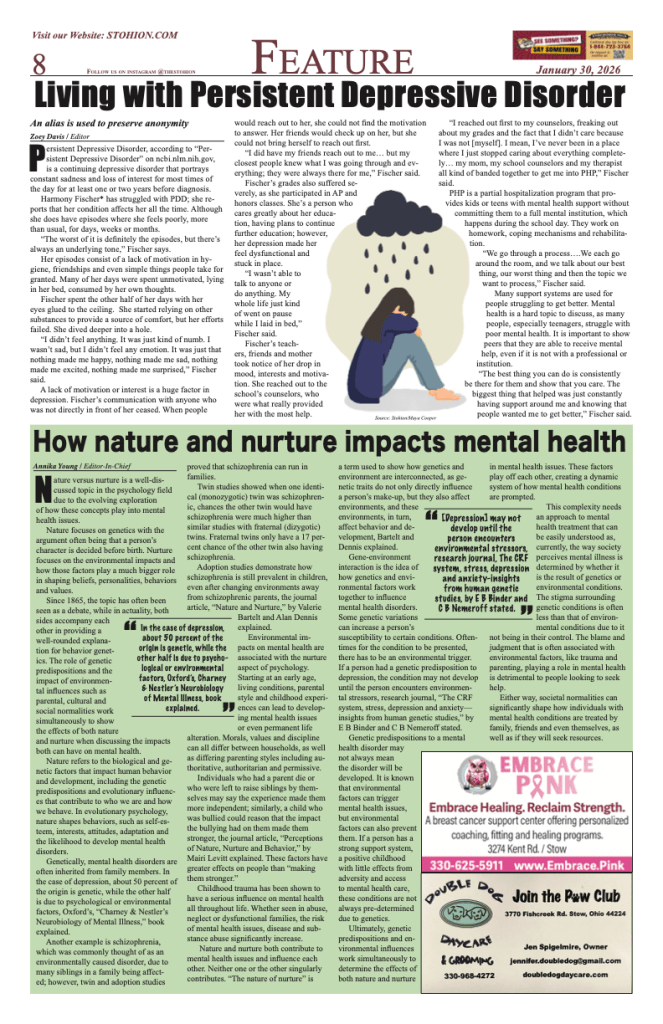
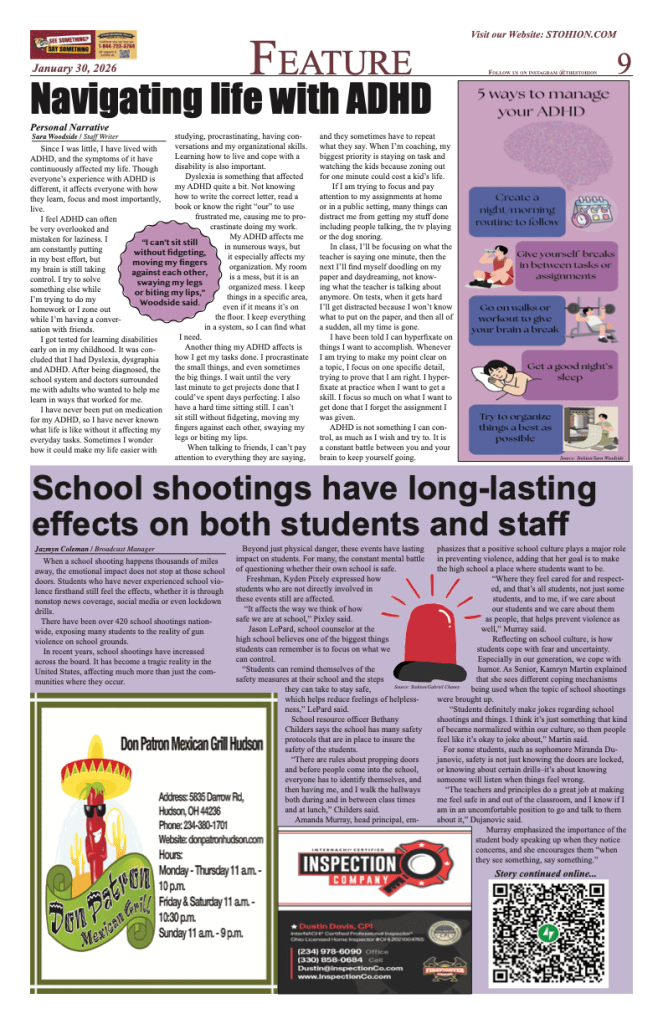
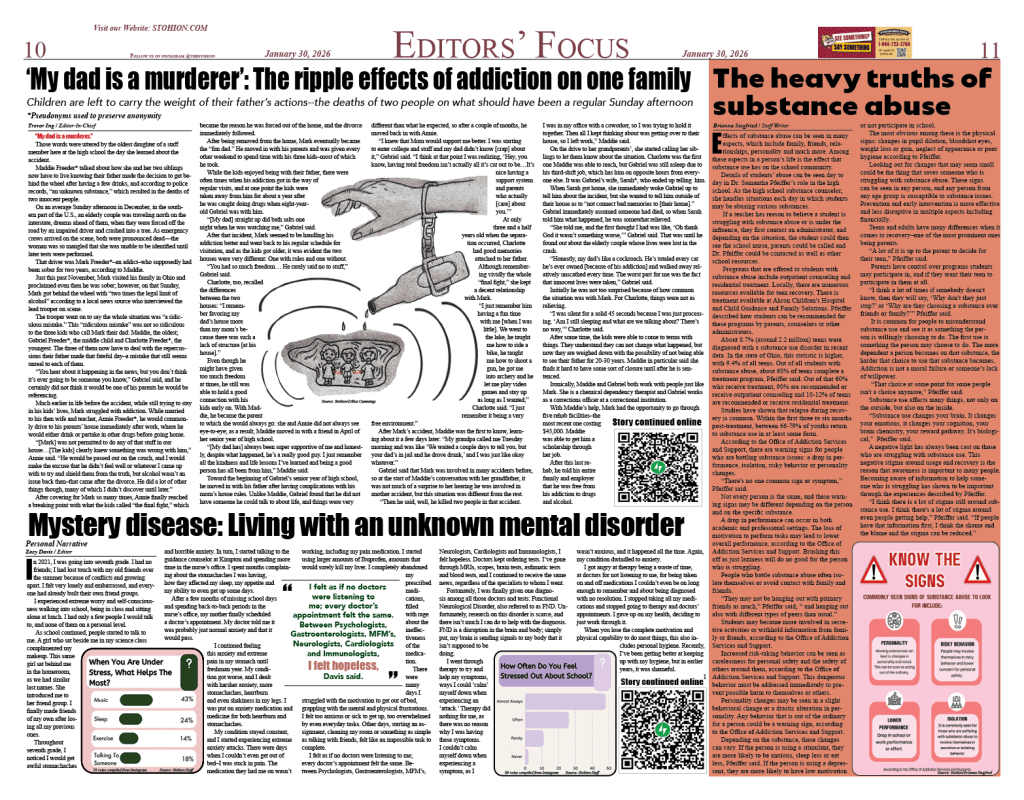
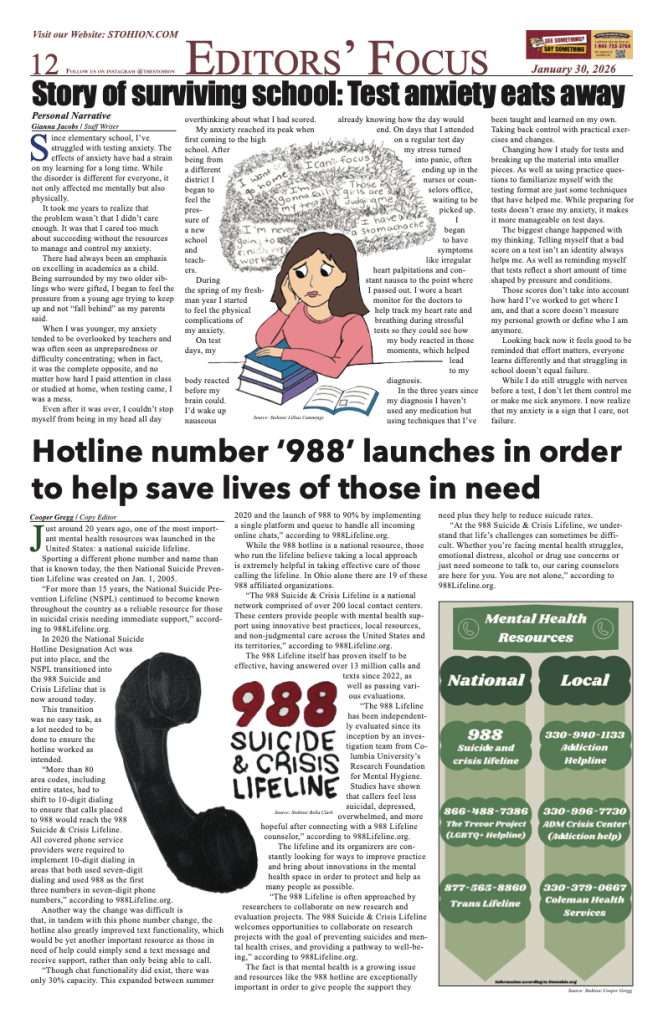
     Whether it’s rules about passes and when students are allowed to go to the bathroom or new legislation pertaining to transgender students’ bathroom use, school bathrooms have previously fallen under heavy controversy.

     Looking more specifically here at the high school, a different problem arises: bathroom closures during lunch periods.

     When a school already only contains two bathrooms per gender, any sort of closure becomes major. While closures are inevitable as things break and messes happen, consistent closures are a different story all together.

     Having the lower restrooms closed every day during lunches is equivalent to not having lower restrooms at all for periods which make up roughly a third of the day. This fact on its own is a rough statistic, but when you look at the actual numbers, things only get worse

     The International Association of Plumbing and Mechanical Officials (IAMPO) publishes the Uniform Plumbing Code (UPC) among other codes and resources by working “in concert with government and industry to implement comprehensive plumbing and mechanical systems around the world,” as per their website.

     Table 422.1 located on pages 38 through 42 of the 2024 UPC gives requirements on minimum plumbing facilities per the number of people occupying the building.

     Located on page 39, there are the minimums for the high school as shown in the row for type of occupancy E which is described as “Educational occupancy- private or public school.”

     Starting with the male statistics, according to the Institute of Education Sciences’s (IES) National Center for Education Statistics, there were 873 male students enrolled in the 2023-2024 school year. For males the UPC requires one water closet (flush toilet) per 50 males. 

     Rounding down to 850 male students, according to the UPC’s minimum requirements, Stow needs 17 water closets for male students to adhere to code. There is an additional requirement for males, that being one urinal per 100 male students. Along with this, every urinal above the required amount, which Stow does do, allows for one less required water closet as long as two thirds of the original requirement are still present. This bumps this required number down to roughly 11 rounding down slightly.

     Looking at the reality of the situation, there are two in the upper restroom and three in the lower, adding to a total of five, which on its own is a little under half of the requirement. 

     When accounting for the lower restrooms daily closure, there are only the two upper water closets remaining, which is a measly 18.18 percent of the minimum amount. 

     The UPC requires slightly more water closets for female students, with one per 40 females. According to the IES, Stow had 850 female students enrolled in the 2023-2024 school year. This means that the UPC would require a minimum of 21 (rounded down) water closets for females. 

     In total, the two girls restrooms have 13 water closets, with eight of those being located in the lower restroom. With both bathrooms open, the girls have it slightly better, as their total is roughly 62 percent of the UPC minimum.

     With five water closets in the upstairs female bathroom, the girls statistics are only marginally better with 23.81 percent of the minimum being fulfilled during lunch periods when these upper restrooms are the only option.

     One simple change that could be made to aid in padding these statistics a small amount is by closing the upper restrooms during lunch and instead keeping the lower bathrooms open. These statistics are still low and far beneath the minimums; however, this small change does help a bit with the boys percent during lunches going from 18.18 to 27.27 and the girls from 23.81 to 38.1. 

     It is more than likely that these codes do not apply to high school legally as the building was made far before this more recent code was put in place, and buildings typically are exempt to the codes that were around at the time. Regardless of it being a legal issue or not, it starts to become an issue of safety as we fall so far below what is now considered the minimums, as these codes “are rules that provide for safe and civilized living” according to the IAPMO website. *

     As of at least 2012, the UPC has had the same minimum requirements for schools when it comes to bathroom facilities. Even if the school isn’t breaking any rules, it is still cause for concern that Stow’s restroom count is so far below today’s accepted minimums.

     When speaking with administration about the school restrooms, assistant principal Jayson Yeagley stated that he believes new policy has helped cut down on unsavory activity taking place in the bathrooms.

     “We’ve assigned teachers and various staff members to be outside of the restroom to make sure that they are first on post. If anything’s odd or they see trends or they smell something or hear something, they say something,” Yeagley said.

     According to Yeagley the reasoning for closing the lower restrooms during lunches is because of a lack of “human capital.”

     “Staff were taking their lunches, and we weren’t able to consistently cover it during lunch, and it only made sense to close that just because we couldn’t be consistent with the way that we were applying these adjustments,” Yeagley said.

     Yeagley firmly believes, while not totally ideal, that these changes implemented have been successful in their intended goals.

     “The adjustments we’ve made, obviously, have been a little bit of an inconvenience for students, [and] for staff, but the data shows it is helping in a lot of important ways,” Yeagley said.

     When discussing the aforementioned statistics with Yeagley, he was unable to share any actual numbers or statistics other than his statement that, “[the data] is definitely trending in a better way.”

     Not only do these closures conflict with international, universal code, but also with the schools own internal systems.

     The colored hallways each have their own distinct colored pass which is in an effort to stop students from wandering the school by keeping them confined to their own colored hallway matching the pass being carried. 

     This system in itself is very intelligent. It allows for easy monitoring of those who are not where they should be due to the passes being the wrong color; however, this system completely falls apart when you are required to leave your floor to use the restroom. 

     During periods where the lower restrooms are closed, students from the two lower hallways have to go up to the second floor to use the upper restrooms, which means they are bringing different colored passes into the different colored upper hallways.

     With all four colored passes converging in one restroom, as well as the chaos of lunches, the monitoring power of this pass system is completely lost.

     High school officials are potentially compromising safety by lowering the already lower than minimum amounts of bathroom facilities as well as sabotaging its own hall pass system, all to solve an issue that can just as easily be fixed by placing a staff member outside of the restroom.

     School officials need to look at their priorities and decide what they believe to be a bigger issue–having to find an additional staff member/members for three periods of the day, or sitting more than halfway below what is seen as the minimum requirements for restrooms for a major portion of the school day. 

October Pop Culture

By: Maya Cooper

October was a record-breaking month in the world of music and entertainment, and many new trends emerged across social media platforms. 

     One of the most anticipated music releases this month was Taylor Swift’s 12th studio album, “The Life of a Showgirl,” which was released Oct. 3. 

     According to Billboard, “The Life of a Showgirl” debuted at number one on the Billboard 200 and earned four million album equivalent units in its first week. 

     Swift also brought her album release celebration to theaters Oct. 3-5 with ‘The Official Release Party of a Showgirl.’ Fans in attendance got a first look at the music video for ‘The Fate of Ophelia’; the album’s lead single, as well as behind-the-scenes footage of the music video, lyric videos of the album’s 12 songs, and explanations of the ideas behind the songs. 

     According to AMC, the film’s three-day theater run earned $34 million in box office sales and $16 million internationally.

     Other big movie releases of the month include “Tron: Ares” which was released Oct. 10, “The Black Phone 2” which entered theaters Oct. 17, plus “Springsteen: Deliver Me From Nowhere and Regretting You,” which both came out Oct. 24. 

     Although “Tron: Ares” led October’s box office sales, it has been considered a disappointing release. 

     According to Variety, the film, which stars Jared Leto, Greta Lee, and Evan Peters, cost $180 million to make, but only earned $33.4 million in its first weekend. Since then, the sales have dropped tremendously. 

     Additionally, many popular reality TV shows like “Survivor,” “Dancing With the Stars,” and “The Voice” started new seasons late September and into early October.

     According to Yahoo, “Dancing With the Stars” has had a spike in viewership this season, with live votes reaching 50 million during the ‘Dedication Night’ episode. 

     Some fan favorite celebrities this season are animal conservationist Robert Irwin, social media influencer Alix Earle and television personality Dylan Efron, who is also the brother of Zac Efron.

     On social media platforms like TikTok, fall trends have taken over as they do every year. Halloween movie nights and snack ideas plus everything pumpkin-flavored has been consistently going viral. “The Gilmore Girls” series also saw a resurgence of viewers because of its cozy New England setting that fans love during the fall months.

     October had many exciting releases, but there is also a lot to look forward to in November. “Wicked: For Good” will be hitting theaters on Nov. 21. On Thanksgiving Day, Nov. 26, both the sequel of the Blockbuster Disney movie “Zootopia,” and the first few episodes of the highly anticipated 5th season of “Stranger Things” are set to premiere.

K-Pop Demon Hunters

By Lukas Prominksi / Staff Writer

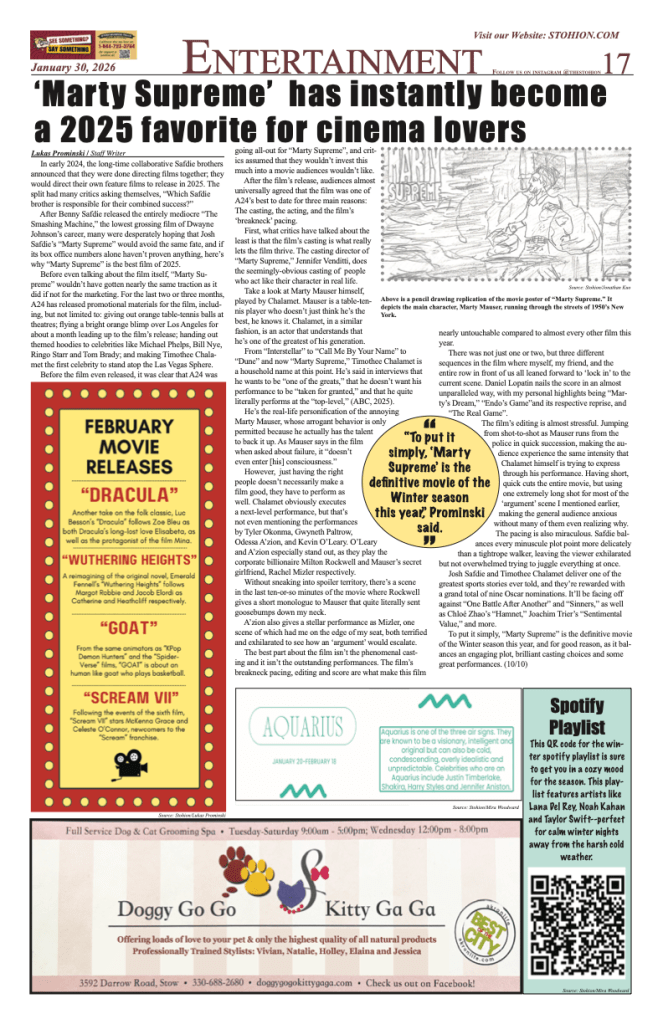
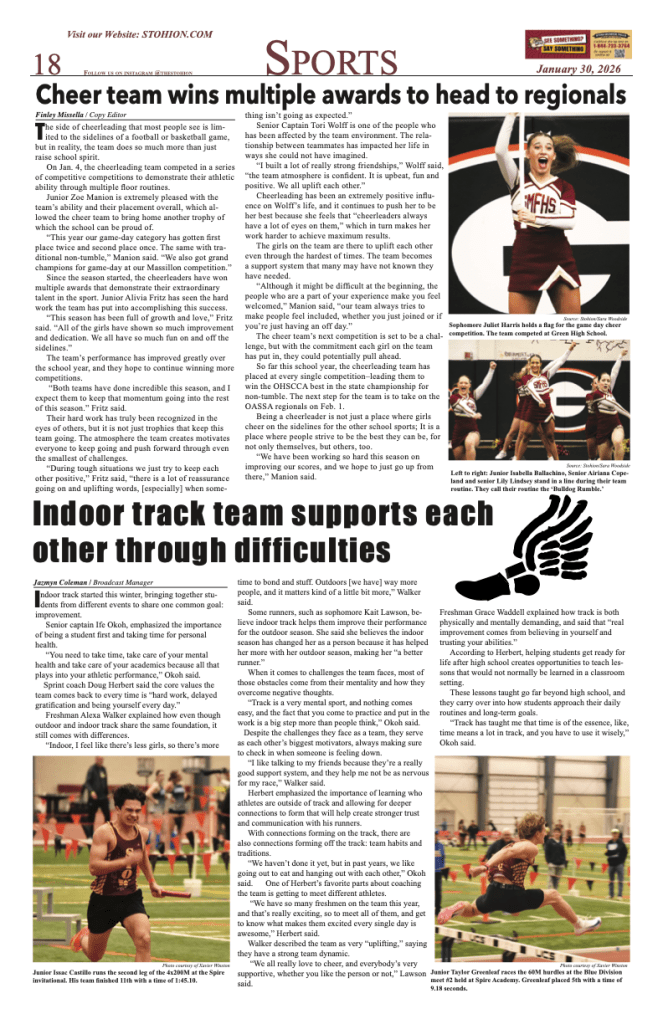
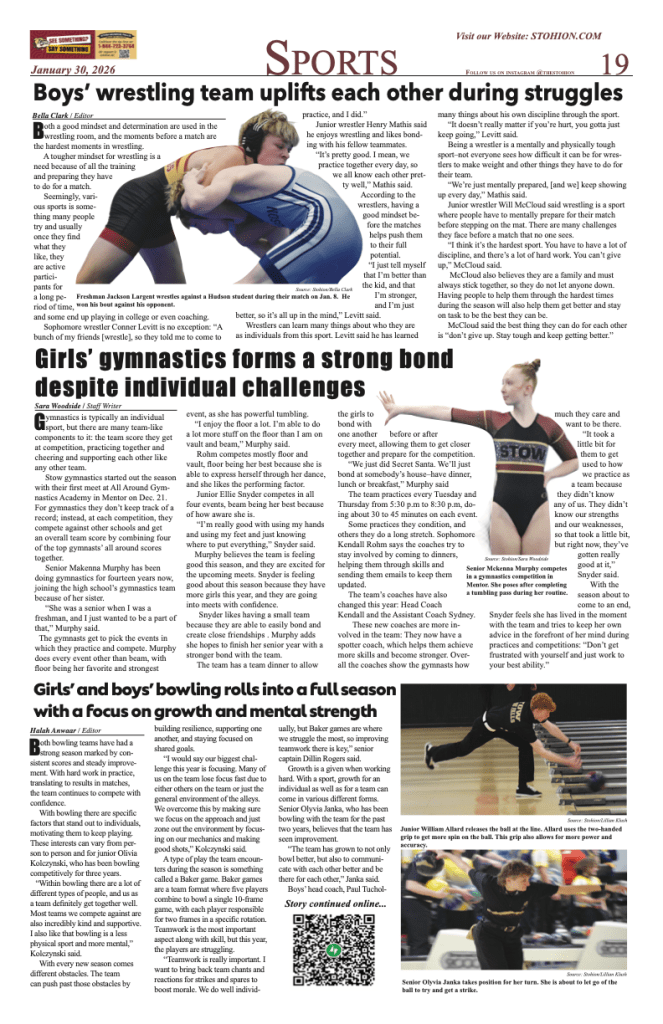
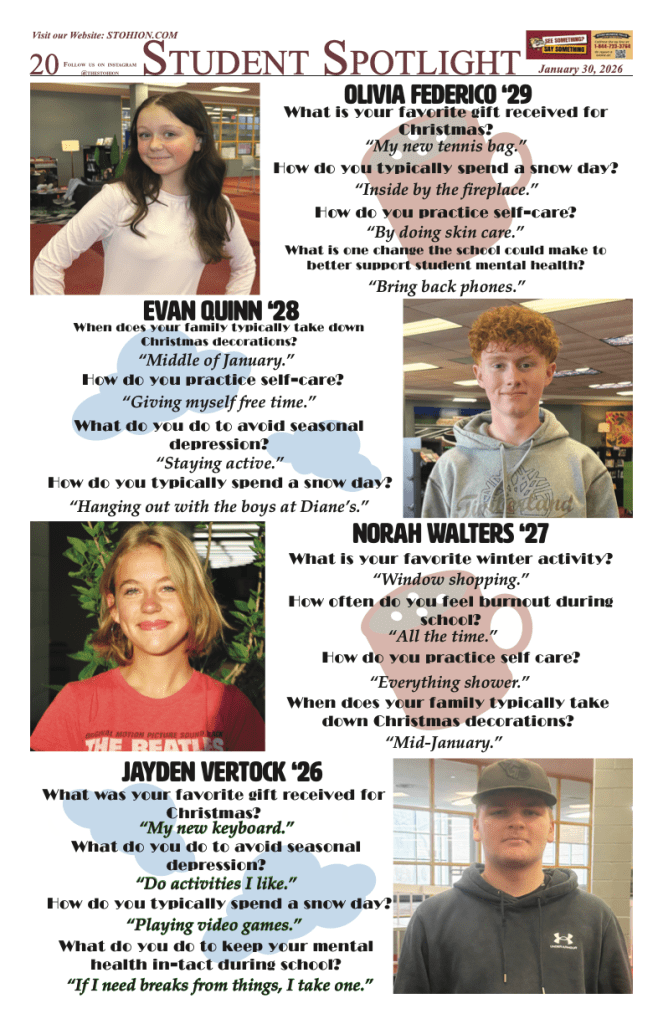
Every year, there’s one movie that really impacts pop culture more than any other. 2022 had “Minions: The Rise of Gru,” 2023 had “Barbie” and 2024 had “Deadpool & Wolverine.”

Every one of these movies actually makes sense to be culture-changing. All of them are based on existing ideas that people recognize, and it makes sense that they would sell so many tickets… So why did this year’s “”KPop Demon Hunters” have such an impact?

It almost seems to defy logic; “KPop Demon Hunters” is an animated film based on no pre-existing media that took the world by storm this year. It has more views than “Squid Game,” “Wednesday” and “Stranger Things,” some of the most culturally significant television shows of all time.

Thinking about it logically, “KPop Demon Hunters” achieved this feat for three reasons: The film is on a streaming service most people have, the film has stunning animation and the film has catchy music.

Start with the first point: “KPop Demon Hunters” is on a streaming service that most people have. According to The Streamable, Netflix is the most subscribed streaming service across America. While Disney+ has 57.8 million subscribers in North America and HBO Max has roughly 60 million, Netflix has nearly 90 million of them across the same demographic. 

Because the film is so accessible to kids looking for something children-oriented to watch, it’s found an audience in young kids who want to later show their parents, siblings and so on and so forth.

But why specifically this movie? That brings me to the second reason the film has had such a big impact:  the animation.

Sony Pictures Animation, the animation studio that produced “KPop Demon Hunters,” has had some major hits lately. While they made plenty of B-movies throughout the mid-2000s and early 2010s, they really started to gain the public’s interest with 2018’s “Spider-Man: Into the Spider-Verse.”

From there, through the critically lauded “The Mitchells vs. the Machines,” and into 2023’s sequel “Spider-Man: Across the Spider-Verse,” Sony Pictures Animation has been bringing animation as a medium forward for the last several years. From the serious animation of the “Spider-Verse” films to the more cartoony “Mitchells” art style, they’ve revolutionized the use of the “2.5D” art style, a type of animation that uses 3D models to attempt to recreate 2D art, allowing for what appears to the audience as realistic depth perception within a 2D cartoon. It’s seemingly genius.

“KPop Demon Hunters” uses the same realistic art style of “Into”/”Across the Spider-Verse,” but instead of using flashing vibrant colors to amplify action sequences, it uses an almost Pixar-like skybox with pretty stars, lighting and effects throughout the air.

While people seemed to love the quick action scenes of the “Spider-Verse” films (especially given that Box Office Mojo calculates “Across the Spider-Verse” as the second-highest-grossing animated film of the year it released), it’s hard to deny that the creators, animators and modelers spent so much time on the look of “KPop Demon Hunters” that it rivals what many (IMDb, for example) consider to be the best animated film of all time.

These pretty skylines, beautiful lighting and great models are hard to ignore regardless of how well-versed in film someone is. Considering how jaw-droppingly pretty it is, it’s no surprise that children would fall in love with the film. I actually, however, don’t even think that’s the biggest thing regarding kids liking the film so much. The movie’s arguably biggest selling point (and what really skyrocketed it into popularity) is the music.

While South Korean pop (K-pop) has definitely seen American charts before (think BTS’ “Butter,” “Dynamite” and BLACKPINK’s “How You Like That”), it’s never been quite as ‘in-the-media’ as it is in relation to this film.

The film starts with an entirely original song by K-pop artists EJAE, Audrey Nuna and Rei Ami. This trend continues throughout the entire film.

Every single song in the movie is sung by real K-pop artists who (after the movie’s release) are Top 50 Most Monthly Listeners list on Spotify. These charts are amplified by the sheer amount of word-of-mouth in relation to the movie. With children having backpacks and water bottles with characters on them and playing the music in the movie, they’re inadvertently convincing their peers to watch the movie.

What’s great about more and more children watching the movie is that they’re exposing themselves to foreign cultures while also having fun. Rumi, Mira and Zoey, the three leads in the film, are actually modeled after studying Korean culture, and side-by-side comparisons between the film and real life are everywhere online.

Without any one of these three things (the ease of access, the beautiful animation and the catchy music), “KPop Demon Hunters” wouldn’t have had nearly the same impact that it’s had in the status quo. Something that would have been nearly unthinkable even just six months ago is now our reality, which is actually a great sign for cinema as a whole.

Getting children away from cinematic universes and sequels and towards original ideas is a great way to potentially expose them to films that they wouldn’t have considered before and to expose them to different cultures.